Kitchen parts that keep a smell
- Hood filter
- A mesh screen above the range that catches grease. Saturated, it releases cooking smell whenever the fan runs.
- Recirculating hood
- A hood that filters air and returns it to the room rather than venting outside. Its charcoal filter loses effect over time.
- Cabinet face and top
- Surfaces near the range that collect a sticky grease film.
- Drip bowl
- A tray under an electric burner where spills burn on and smell.
- Dishwasher sump
- The basin at the bottom of the tub where food debris can sour.
- Shelf liner
- Adhesive paper in cabinets that absorbs spills and holds smell.
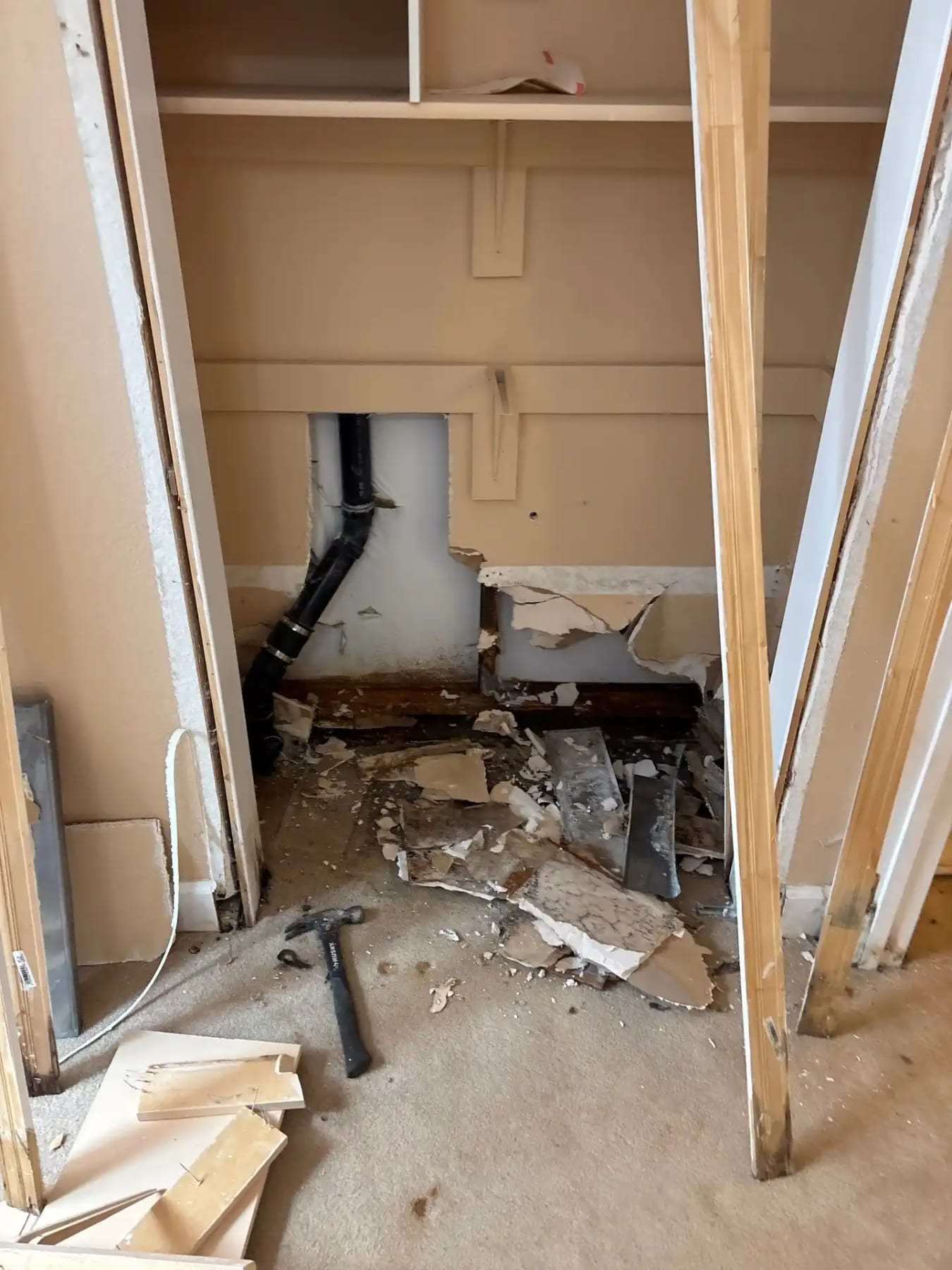
Kitchen cabinet base removed to expose the plumbing and a damaged wall. Illustrative image of the process; it does not document a job done for this site.
Why kitchens need their own line in the make-ready
In a community with a fast turn schedule, kitchens are often cleaned by the same crew pass as everything else. That tends to cover the visible surfaces and miss the parts that keep the smell. A wipe of the counters and a mop of the floor will not touch the hood filter, the cabinet tops or the inside of the dishwasher.
Many apartment hoods recirculate air instead of venting it outside. That means the filter is the only thing between a greasy range and the rest of the room, and a charcoal filter that was never replaced does nothing for odor. Checking what type of hood each floor plan has and keeping the right filter in stock prevents guessing during a turn.
Work top to bottom so that nothing falls onto a surface that is already clean. Hood and cabinet tops first, then appliances and cabinet interiors, then counters and floors.
Order of work
Replace or clean the hood filter
Soak a metal mesh filter in hot degreaser or swap it. Replace a charcoal filter on a recirculating hood.
Degrease cabinet tops and the wall behind the range
Use a cleaner suited to the finish and rinse so no film is left.
Pull drip bowls and the oven racks
Soak or replace them. A burnt smell often lives here.
Clean the dishwasher and disposal
Remove and rinse the filter, wipe the splash guard and run a hot cleaning cycle.
Remove cabinet liners and wipe the interior
Replace liners only if the cabinet is fully dry and clean.
Run the fan and recheck
Smell the kitchen with the fan on and then off, and compare.
Quick reference for common kitchen smells
- Smell
- Old fried food
- Likely source
- Hood filter and cabinet tops
- First action
- Replace the filter and degrease surfaces
- Smell
- Burnt smell when the oven heats
- Likely source
- Oven floor or drip bowls
- First action
- Clean or replace them
- Smell
- Sour from the sink
- Likely source
- Disposal splash guard or trap
- First action
- Scrub the guard and run water
- Smell
- Sour from the dishwasher
- Likely source
- Sump and filter
- First action
- Clean the filter and run a hot cycle
Common questions
Is it worth replacing a range with a stubborn smell?
Sometimes. If a thorough cleaning does not help and the oven interior is damaged, replacement is often simpler than repeating the cleaning.
General information for Centennial, not a quote or professional advice. In an emergency, call 911.