What usually causes it
- Weak or disconnected fan
- Humid air stays in the room and feeds mildew
- Failing caulk
- Water gets behind the tub or shower and stays damp
- Dry trap
- A sewer-type smell enters from the drain
- Shared fan duct
- Odors from another unit travel back through the duct
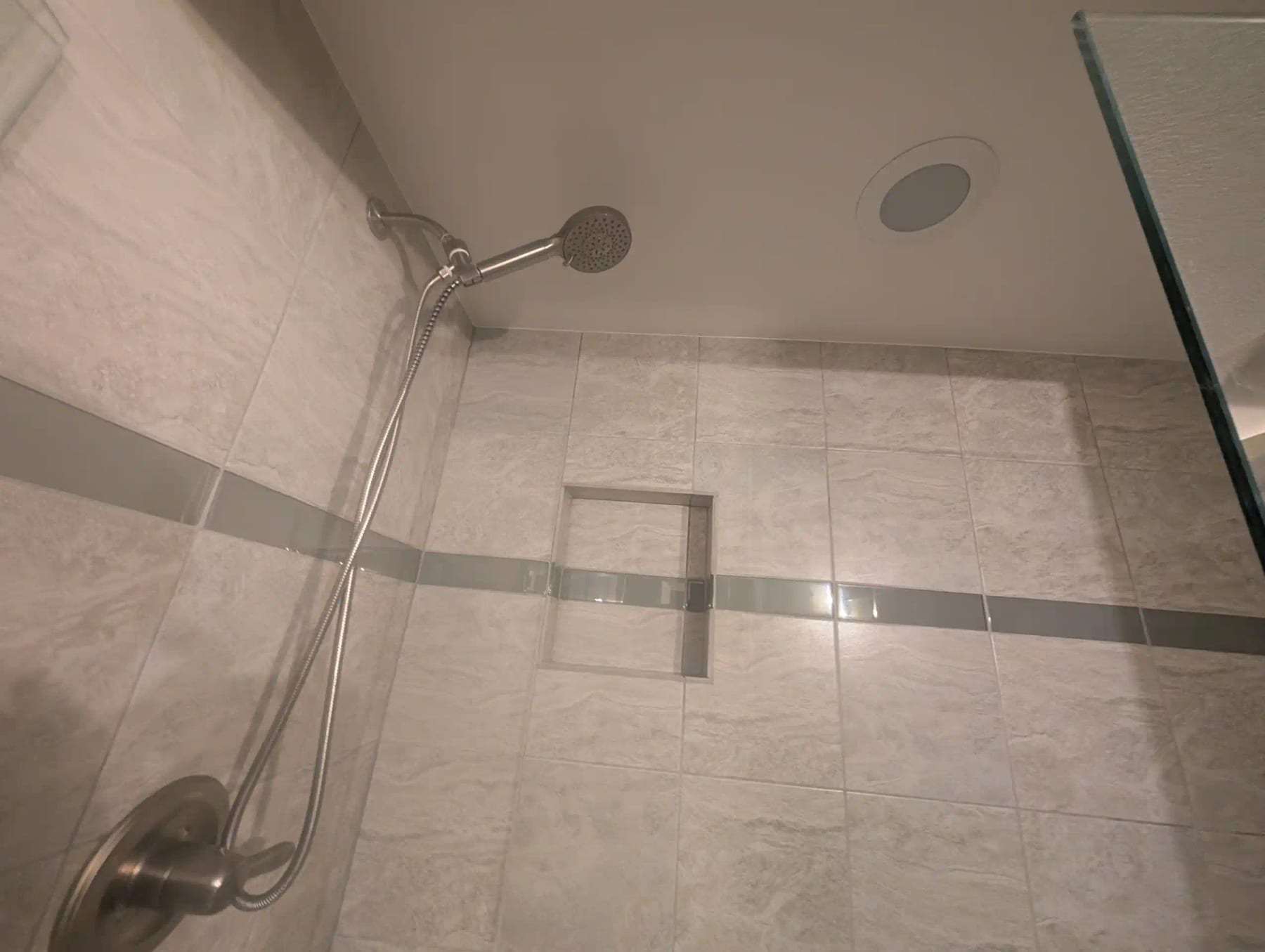
Tiled shower with a handheld shower head and a recessed niche. A general example of this kind of work, not a photo of a particular home, business or job.
Fans do more than they seem to
In many multifamily buildings the bathroom fan is part of a shared exhaust system. A small motor in the ceiling, or a central fan on the roof, pulls air through a duct that may serve several units. When the fan is weak, the duct is clogged with lint or a damper is stuck, humid air hangs in the room after every shower, and smells from other units can drift in through the same duct.
A simple check is to hold a single square of tissue near the grille with the fan on. If the paper does not hold on the grille, airflow is low. Staff can note the result in the unit file and order a repair for the fan or a cleaning of the grille.
Moisture also finds the caulk lines. Where tub or shower caulk has split, water runs behind the surround and keeps the wall cavity damp. A sour, earthy smell that is strongest near the tub usually points there.
Five-minute bathroom check
- Run the fan and check airflow with a piece of tissue.
- Remove the grille and look for lint buildup.
- Run the shower and the sink, then watch the drains for slow flow or gurgling.
- Pour water into any floor drain and refill traps.
- Press along the tub caulk and look for gaps, mildew or soft spots.
- Smell inside the vanity cabinet, where small leaks often go unnoticed.
Two kinds of bathroom smell
Sorting by character helps point toward the source.
Damp and mildewy
- Strongest near the tub or on the ceiling.
- Often accompanied by visible spotting or soft caulk.
- Improves when the room is aired or dried.
- Fixes: fan repair, caulk, cleaning, drying.
Sewer-like
- Strongest at a drain or an unused fixture.
- Often follows a long vacancy or a dry spell.
- Improves when the trap is refilled.
- Fixes: refill the trap, check the vent, call plumbing if it persists.
Common questions
Who handles a shared exhaust duct problem?
That depends on the building. Many communities route it to the maintenance supervisor or to an HVAC vendor, since a fault can affect several units at once.
General information for Centennial, not a quote or professional advice. In an emergency, call 911.